Quay lại danh sách
#16Tập 5

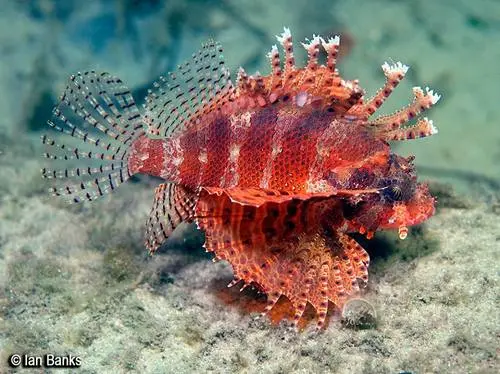
Loài cá Mao Tiên Quạt Ngắn

Dendrochirus brachypterus (Cuvier and Valenciennes, 1829)
WoRMS — Tên cũ — đã được cập nhật
Tên hiện hành: Neochirus brachyptera
Xem trên WoRMS (marinespecies.org)

Thông tin chính

Tên gọi khác
Cá Mao Tiên Quạt Ngắn, Cá Sư tử Quạt Ngắn
Common Name (EN)
Shortfin turkeyfish, Shortfin lionfish
Kích thước
Lớn nhất 166mm.
Size
Maximum 166mm.

Mô tả hình thái

Phylogenetic definition. Hypsilophodon foxii, Edmontosaurus regalis, their most recent common ancestor, and all of its descendants (Norman, 2015). Unambiguous synapomorphies. For the topology recovered by parsimony, Clypeodonta has nine unambiguous synapomorphies: presence of a quadrate buttress or " hamular process " (63.1), quadrate with a lateral condyle that is larger than the medial condyle (69.2), mandibular articulation that is horizontal to dorsomedially inclined in caudal view (70.0 / 1), maxillary and dentary teeth with crowns that taper toward the root (127.1, 128.1), with the base of the crown defined by an everted lip which makes the crown slightly inset from the root (146.1, 147.1), presence of a primary ridge on labial side of maxillary teeth (139.1), and elongate centra of postaxial cervical vertebrae, with craniocaudal length more than twice the dorsoventral height (159.1). Within the Bayesian topology, Clypeodonta is characterized primarily by features of the teeth and jaws: presence of a diastema in the maxilla (16.1), equal lengths in the oral margin of the premaxilla and predentary (84.1), a coronoid process that extends more than one crown height dorsal to the tooth row (101.1), surangular with a small fenestra positioned dorsally on or near the dentary joint (111.1), surangular foramen rostral to the lateral lip of the glenoid (114.1), cheek teeth with asymmetrically distributed enamel (134.1), ridges running the full length of the crown on the labial side of maxillary teeth and the lingual side of dentary teeth (135.1), and a femoral head separated from the greater trochanter by a distinct constriction (292.1). Topology. In the parsimony tree (Figures 6, 7), Clypeodonta is the sister clade to Thescelosauridae. This node has a jackknife value of 15, but a relatively high Bremer support of 4. Hypsilophodon is recovered as the only non-iguanodontian clypeodontan. In the Bayesian topology (Figures 6, 8), Hypsilophodon is recovered within a large EN · FishBase/GBIF

Sinh thái & Dinh dưỡng

Habitat: Estuaries, Coral reefs, Benthic, Soft bottom. Feeding: hunting macrofauna (predator). Depth range: 2 - 80 m. Common in reef flats and shallow lagoons, in areas with weed-covered rocks on sandy substrates. Adults often found on sponges and juveniles are sometimes found in small aggregations on remote bommies with 10 or so individuals (Ref. 48635). Nocturnal. Feed on small crustaceans (Ref. 37816).EN · FishBase/GBIF

Phân bố

Đông Châu Phi, Biển Đỏ, Haoai, Ôttrâylia, Micrônêxia, Inđônêxia, Malaixia, Philíppin, Trung Quốc, Nhật Bản. Miền Trung Việt Nam.

Giá trị kinh tế

Commercial importance: subsistence fisheries. Price category: high. Aquaculture: never/rarely. Vulnerability index: 10.0/100EN · FishBase/GBIF

Mẫu vật & Tài liệu

Nơi lưu trữ mẫu
Viện Hải Dương Học (Nha Trang).
Specimen
Institute of Oceanography (Nha Trang).
Tình trạng
Thường gặp, số lượng ít.
Status
Common, seldom abundant.
Tài liệu dẫn
Herre, 1953. De Beaufort and Briggs, 1962.
Literature
Herre, 1953. De Beaufort and Briggs, 1962.

Sinh học — Sinh thái BIO

Tên tiếng Anh (FishBase)
Dwarf lionfish
English name (FishBase)
Dwarf lionfish
Chiều dài tối đa
17.0 cm TL
Max length
17.0 cm TL
Độ sâu phân bố
2 - 80 m
Depth range
2 - 80 m
Môi trường sống
Estuaries, Coral reefs, Benthic, Soft bottom
Habitat
Estuaries, Coral reefs, Benthic, Soft bottom
Nguy hiểm cho người
Có nọc độc
Danger to humans
venomous
Kiểu ăn
Săn mồi lớn (ăn thịt)
Feeding type
hunting macrofauna (predator)
Bậc dinh dưỡng
3.56
Trophic level
3.56
Hình thức sinh sản
Phân giới tính, thụ tinh ngoài
Reproduction
dioecism, external fertilization
Giá trị thương mại
Khai thác tự cung tự cấp
Importance
subsistence fisheries
Nuôi trồng thủy sản
Không/hiếm khi
Aquaculture
never/rarely

Ghi chú chi tiết

Tóm tắt sinh học (FishBase)(Biology summary (FishBase))

Phổ biến ở các vùng mặt bằng rạn san hô và đầm phá nông, tại những khu vực có đá phủ rong trên nền đáy cát. Cá trưởng thành thường bắt gặp sống gắn liền với bọt biển, trong khi cá con đôi khi hợp thành các nhóm nhỏ khoảng 10 cá thể sống tại các khối san hô đơn độc ngoài khơi. Hoạt động về đêm. Thức ăn chủ yếu gồm các loài giáp xác nhỏ.

Xem văn bản gốc tiếng Anh (FishBase / GBIF)

Common in reef flats and shallow lagoons, in areas with weed-covered rocks on sandy substrates. Adults often found on sponges and juveniles are sometimes found in small aggregations on remote bommies with 10 or so individuals (Ref. 48635). Nocturnal. Feeds on small crustaceans (Ref. 37816).

Ghi chú sinh thái(Ecology notes)

Phổ biến ở các vùng mặt bằng rạn san hô và đầm phá nông, tại những khu vực có đá phủ rong trên nền đáy cát. Cá trưởng thành thường bắt gặp sống gắn liền với bọt biển, trong khi cá con đôi khi hợp thành các nhóm nhỏ khoảng 10 cá thể sống tại các khối san hô đơn độc ngoài khơi. Hoạt động về đêm. Thức ăn chủ yếu gồm các loài giáp xác nhỏ.

Xem văn bản gốc tiếng Anh (FishBase / GBIF)

Common in reef flats and shallow lagoons, in areas with weed-covered rocks on sandy substrates. Adults often found on sponges and juveniles are sometimes found in small aggregations on remote bommies with 10 or so individuals (Ref. 48635). Nocturnal. Feed on small crustaceans (Ref. 37816).

Ghi chú sinh sản(Reproduction notes)

Ghép đôi rõ rệt. Con cái sở hữu các cấu trúc buồng trứng chuyên hóa bao gồm các phiến mang trứng dạng cuống và biểu mô tiết.

Xem văn bản gốc tiếng Anh (FishBase / GBIF)

Distinct pairing (Ref. 205). Females possess specialized ovarian structures including stalk-like ovigerous lamellae and secretory epithelia (Ref. 32832).

Mô tả hình thái (GBIF)(Morphological description (GBIF))

Định nghĩa phát sinh chủng loại. Hypsilophodon foxii, Edmontosaurus regalis, tổ tiên chung gần nhất của chúng và tất cả các loài hậu duệ của chúng (Norman, 2015). Các đặc điểm đồng hình thái nguyên thủy rõ ràng. Đối với sơ đồ cây phát sinh được khôi phục bằng phương pháp parsimony, nhóm Clypeodonta có chín đặc điểm đồng hình thái rõ ràng: sự hiện diện của phần mấu vuông hoặc "mấu móc" (63.1), xương vuông có lồi cầu bên lớn hơn lồi cầu trong (69.2), khớp hàm dưới nằm ngang hoặc nghiêng về phía lưng-trong khi nhìn từ phía đuôi (70.0 / 1), răng hàm trên và xương dentary có phần thân răng thon dần về phía chân răng (127.1, 128.1), với phần gốc thân răng được giới hạn bởi một gờ lật ra ngoài khiến thân răng thụt vào một chút so với chân răng (146.1, 147.1), sự hiện diện của gờ chính ở mặt môi của răng hàm trên (139.1), và thân đốt sống cổ sau trục kéo dài, với chiều dài từ đầu đến đuôi lớn hơn gấp đôi chiều cao từ lưng đến bụng (159.1). Trong sơ đồ cây Bayesian, Clypeodonta được đặc trưng chủ yếu bởi các đặc điểm về răng và hàm: sự hiện diện của khoảng hở (diastema) ở xương hàm trên (16.1), chiều dài bằng nhau ở bờ miệng của xương tiền hàm trên và xương tiền hàm dưới (84.1), mỏm vẹt (coronoid process) kéo dài vượt quá một chiều cao thân răng về phía lưng so với hàng răng (101.1), xương surangular có một lỗ cửa sổ nhỏ nằm ở phía trên trên hoặc gần khớp xương dentary (111.1), lỗ xương surangular nằm ở phía trước môi bên của ổ khớp hàm (114.1), răng má có lớp men phân bố không đối xứng (134.1), các gờ chạy dọc toàn bộ chiều dài thân răng ở mặt môi của răng hàm trên và mặt lưỡi của răng hàm dưới (135.1), và chỏm xương đùi được ngăn cách với mấu chuyển lớn bởi một đoạn eo thắt rõ rệt (292.1). Sơ đồ phát sinh. Trong cây parsimony (Hình 6, 7), Clypeodonta là nhánh chị em với Thescelosauridae. Nút này có giá trị jackknife là 15, nhưng có độ hỗ trợ Bremer tương đối cao là 4. Hypsilophodon được khôi phục là loài clypeodontan phi-iguanodontian duy nhất. Trong sơ đồ cây Bayesian (Hình 6, 8), Hypsilophodon được khôi phục nằm trong một...

Xem văn bản gốc tiếng Anh (FishBase / GBIF)

Phylogenetic definition. Hypsilophodon foxii, Edmontosaurus regalis, their most recent common ancestor, and all of its descendants (Norman, 2015). Unambiguous synapomorphies. For the topology recovered by parsimony, Clypeodonta has nine unambiguous synapomorphies: presence of a quadrate buttress or " hamular process " (63.1), quadrate with a lateral condyle that is larger than the medial condyle (69.2), mandibular articulation that is horizontal to dorsomedially inclined in caudal view (70.0 / 1), maxillary and dentary teeth with crowns that taper toward the root (127.1, 128.1), with the base of the crown defined by an everted lip which makes the crown slightly inset from the root (146.1, 147.1), presence of a primary ridge on labial side of maxillary teeth (139.1), and elongate centra of postaxial cervical vertebrae, with craniocaudal length more than twice the dorsoventral height (159.1). Within the Bayesian topology, Clypeodonta is characterized primarily by features of the teeth and jaws: presence of a diastema in the maxilla (16.1), equal lengths in the oral margin of the premaxilla and predentary (84.1), a coronoid process that extends more than one crown height dorsal to the tooth row (101.1), surangular with a small fenestra positioned dorsally on or near the dentary joint (111.1), surangular foramen rostral to the lateral lip of the glenoid (114.1), cheek teeth with asymmetrically distributed enamel (134.1), ridges running the full length of the crown on the labial side of maxillary teeth and the lingual side of dentary teeth (135.1), and a femoral head separated from the greater trochanter by a distinct constriction (292.1). Topology. In the parsimony tree (Figures 6, 7), Clypeodonta is the sister clade to Thescelosauridae. This node has a jackknife value of 15, but a relatively high Bremer support of 4. Hypsilophodon is recovered as the only non-iguanodontian clypeodontan. In the Bayesian topology (Figures 6, 8), Hypsilophodon is recovered within a large

Danh pháp đồng nghĩa & Phân loại gốc

Pterois brachypterus Cuvier and Valenciennes, Hist. Nat. Poiss., Vol.4, p.70, 1829. Bleeker, 1852. Gunther, 1860. Klunzinger, 1870. Weber, 1913. Barnard, 1927.
Pseudomonopterus brachypterus Bleeker, Ned. Tijds. Dierk., Vol.2, p.148, 1865.
Pseudomonopterus (Dendrochirus) brachypterus Bleeker, Verh. Akad. Amsterdam., Vol.16, p.53, pl.3, fig.3, 1876.
Dendrochirus brachypterus Jordan and Seale, Bull. U.S. Bur. Fisheries, Vol.25, p.378, 1906. Fowler, 1928. Smith, 1950. Herre, 1953.