
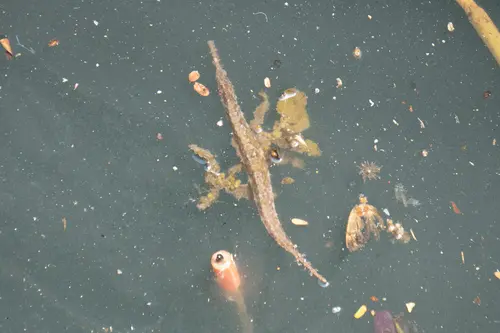
Đông Phi, Samoa, Madagascar, Hồng Hải, New Guinea, Australia, Indoneisa, Malaysia, Philippines, Thái Lan, Nhật Bản, Trung Quốc, Việt Nam. Miền Trung.
Mẫu vật & Tài liệu
Nơi lưu trữ mẫu
Viện Hải dương học (Nha Trang).
Specimen
Institute of Oceanography (Nhatrang).
Tình trạng
Ít gặp.
Status
Uncommon.
Tài liệu dẫn
Herre, 1953. Trương Xuân Lâm, 1962.
Literature
Herre, 1953. Zhang, 1962.
Sinh học — Sinh thái BIO
Tên tiếng Anh (FishBase)
Alligator pipefish
English name (FishBase)
Alligator pipefish
Chiều dài tối đa
29.0 cm TL
Max length
29.0 cm TL
Độ sâu phân bố
0 - 10 m
Depth range
0 - 10 m
Môi trường sống
Estuaries, Mangroves, Coral reefs
Habitat
Estuaries, Mangroves, Coral reefs
Sách Đỏ IUCN
LC
IUCN Red List
LC
Nguy hiểm cho người
Vô hại
Danger to humans
harmless
Kiểu ăn
Săn mồi lớn (ăn thịt)
Feeding type
hunting macrofauna (predator)
Bậc dinh dưỡng
3.60
Trophic level
3.60
Hình thức sinh sản
dioecism, in brood pouch or similar structure fertilization
Reproduction
dioecism, in brood pouch or similar structure fertilization
Mùa sinh sản
Một đỉnh sinh sản rõ ràng mỗi năm
Spawning
one clear seasonal peak per year
Chăm sóc con
paternal
Parental care
paternal
Giá trị thương mại
Thương mại
Importance
commercial
Nuôi trồng thủy sản
Không/hiếm khi
Aquaculture
never/rarely
Ghi chú chi tiết
Tóm tắt sinh học (FishBase)(Biology summary (FishBase))
Loài này phân bố ở các vùng nước nông ven biển kín gió, sinh sống trên hoặc giữa các thảm tảo, cỏ biển (Ref. 41878) hoặc các đám rong trôi nổi (Ref. 1602). Cá con đôi khi được tìm thấy gần bề mặt nước (Ref. 4281). Đây là loài noãn thai sinh (Ref. 205). Cá đực mang trứng trong một túi ấp nằm ở mặt dưới đuôi (Ref. 205). Loài này được sử dụng trong y học cổ truyền Trung Quốc để chiết xuất Hải long, một trong những vị thuốc quan trọng (Ref. 12206). Loài này đã được nuôi thành công trong môi trường nhân tạo (Ref. 35416).
Xem văn bản gốc tiếng Anh (FishBase / GBIF)
Occur in protected coastal shallows over or among algae, seagrasses (Ref. 41878), or floating weeds (Ref. 1602). Juveniles occasionally found near the surface (Ref. 4281). Ovoviviparous (Ref. 205). The males carry the eggs in a brood pouch which is found under the tail (Ref. 205). Used in Chinese medicine to extract Hailong, one of the important drugs (Ref. 12206). Has been reared in captivity (Ref. 35416).
Ghi chú sinh thái(Ecology notes)
Phân bố tại các vùng nước nông ven biển kín gió, sinh sống trên hoặc giữa các thảm tảo, cỏ biển hoặc các đám rong trôi nổi (Ref. 1602). Cá con đôi khi được tìm thấy gần bề mặt nước (Ref. 4281). Thức ăn chủ yếu gồm các loài động vật không xương sống tầng đáy và sinh vật phù du (Ref. 11889).
Xem văn bản gốc tiếng Anh (FishBase / GBIF)
Occur in protected coastal shallows over or among algae, seagrasses, or floating weeds (Ref. 1602). Juveniles occasionally found near the surface (Ref. 4281). Feed on benthic invertebrates and zooplankton (Ref. 11889).
Ghi chú sinh sản(Reproduction notes)
Cá đực mang trứng trong một túi ấp chuyên biệt (Ref. 205).
Xem văn bản gốc tiếng Anh (FishBase / GBIF)
Male carries the eggs in a brood pouch (Ref. 205).
Gasterotokeus biaculeatus Castelnau, Proc; Acclimat. Soc. Victoria, Vol.2, p.120, 1873; Jordan and Seale, 1905; Evermann and Seale, 1907; Jordan and Richardson, 1908; Weber, 1913.
Syngnathoides biaculeatus McCulloch, Check list Fish New South Wales, p.27, 1919; Weber and de Beaufort, 1922; Fowler, 1927; Herre, 1940-41.