
Quay lại danh sách
#242Tập 3

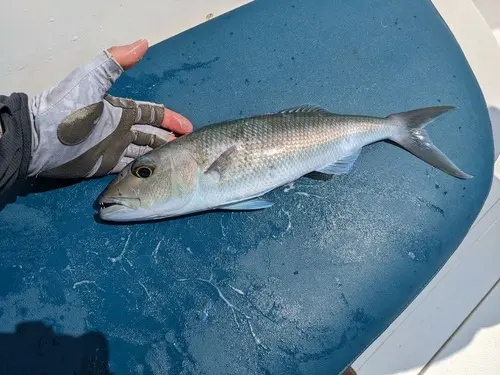
Cá Miền xanh

Aprion virescens Cuvier and Valenciennes, 1830

WoRMS — Tên hợp lệ trên WoRMS
Tên được xác nhận
Xem trên WoRMS (marinespecies.org)

Thông tin chính

Tên gọi khác
Cá Mi biển ền xanh, Cá Song mi ền xanh
Common Name (EN)
Green jobfish, Blue snapper.
Kích thước
30 cm.
Size
30 cm.

Phân bố

Ấn Độ Dương, Australia, Indonesia, Sri Lanca, Hawaii, Philippines, Việt Nam. Miền Trung

Mẫu vật & Tài liệu

Nơi lưu trữ mẫu
Viện Hải dương học (Nha Trang).
Specimen
Institute of Oceanography (Nhatrang).
Tình trạng
Ít gặp.
Status
Uncommon.
Tài liệu dẫn
Weber and de Beaufort, 1936. Herre, 1953. Orsi, 1974.
Literature
Weber and de Beaufort, 1936. Herre, 1953. Orsi, 1974.

Sinh học — Sinh thái BIO

Tên tiếng Anh (FishBase)
Green jobfish
English name (FishBase)
Green jobfish
Chiều dài tối đa
112.0 cm TL
Max length
112.0 cm TL
Trọng lượng tối đa
15,400 g
Max weight
15,400 g
Tuổi thọ
32.0 năm
Longevity
32.0 năm
Độ sâu phân bố
0 - 180 m
Depth range
0 - 180 m
Môi trường sống
Neritic, Coral reefs, Rocky
Habitat
Neritic, Coral reefs, Rocky
Sách Đỏ IUCN
LC
IUCN Red List
LC
Nguy hiểm cho người
reports of ciguatera poisoning
Danger to humans
reports of ciguatera poisoning
Kiểu ăn
Săn mồi lớn (ăn thịt)
Feeding type
hunting macrofauna (predator)
Bậc dinh dưỡng
4.28
Trophic level
4.28
Hình thức sinh sản
Phân giới tính, thụ tinh ngoài
Reproduction
dioecism, external fertilization
Giá trị thương mại
Thương mại lớn
Importance
highly commercial
Nuôi trồng thủy sản
Không/hiếm khi
Aquaculture
never/rarely

Ghi chú chi tiết

Tóm tắt sinh học (FishBase)(Biology summary (FishBase))

Cá trưởng thành sinh sống ở vùng nước thoáng của các đầm phá sâu, các kênh rạch hoặc các rạn san hô hướng ra biển (Ref. 9710). Loài này phân bố ở tầng trung - đáy (Ref. 58302). Chúng thường sống đơn độc nhưng đôi khi cũng tập trung thành nhóm. Thức ăn chủ yếu là cá, ngoài ra còn bao gồm tôm, cua, động vật chân đầu và các sinh vật phù du (Ref. 30573, 48635). Cá thường được tiêu thụ ở dạng tươi, đôi khi được phơi khô hoặc ướp muối. Thịt cá có chất lượng rất ngon. Những cá thể lớn có thể tích lũy độc tố ciguatera (Ref. 37816).

Xem văn bản gốc tiếng Anh (FishBase / GBIF)

Adults inhabit open waters of deep lagoons, channels, or seaward reefs (Ref. 9710). Found in benthopelagic waters (Ref. 58302). Usually seen singly, but also in groups. They feed mainly on fishes, but also on shrimps, crabs, cephalopods and planktonic organisms (Ref. 30573, 48635). Mainly marketed fresh but also dried and salted. Excellent eating. Large individuals may be ciguatoxic (Ref. 37816).

Ghi chú sinh thái(Ecology notes)

Sinh sống tại vùng nước thoáng của các đầm phá sâu, các kênh rạch hoặc các rạn san hô hướng ra biển (Ref. 9710). Thường bắt gặp sống đơn độc hoặc theo nhóm (Ref. 30573, 48635). Đây là loài hoạt động kiếm ăn vào ban ngày (Ref. 122680). Thức ăn chủ yếu gồm cá, tôm, cua, động vật chân đầu và các sinh vật phù du (Ref. 30573, 48635).

Xem văn bản gốc tiếng Anh (FishBase / GBIF)

Inhabits open waters of deep lagoons, channels, or seaward reefs (Ref. 9710). Usually seen singly, but also in groups (Ref. 30573, 48635). Daytime feeder (Ref. 122680). Feeds mainly on fishes, but also on shrimps, crabs, cephalopods and planktonic organisms (Ref. 30573, 48635).

Mô tả hình thái (GBIF)(Morphological description (GBIF))

Đoạn văn bản mô tả hình thái bạn cung cấp thuộc về phân loại học của nhóm khủng long Clypeodonta (không liên quan đến loài cá Aprion virescens). Do đó, nội dung này không thể dịch sang tiếng Việt trong ngữ cảnh mô tả đặc điểm hình thái của cá.

Xem văn bản gốc tiếng Anh (FishBase / GBIF)

Phylogenetic definition. Hypsilophodon foxii, Edmontosaurus regalis, their most recent common ancestor, and all of its descendants (Norman, 2015). Unambiguous synapomorphies. For the topology recovered by parsimony, Clypeodonta has nine unambiguous synapomorphies: presence of a quadrate buttress or " hamular process " (63.1), quadrate with a lateral condyle that is larger than the medial condyle (69.2), mandibular articulation that is horizontal to dorsomedially inclined in caudal view (70.0 / 1), maxillary and dentary teeth with crowns that taper toward the root (127.1, 128.1), with the base of the crown defined by an everted lip which makes the crown slightly inset from the root (146.1, 147.1), presence of a primary ridge on labial side of maxillary teeth (139.1), and elongate centra of postaxial cervical vertebrae, with craniocaudal length more than twice the dorsoventral height (159.1). Within the Bayesian topology, Clypeodonta is characterized primarily by features of the teeth and jaws: presence of a diastema in the maxilla (16.1), equal lengths in the oral margin of the premaxilla and predentary (84.1), a coronoid process that extends more than one crown height dorsal to the tooth row (101.1), surangular with a small fenestra positioned dorsally on or near the dentary joint (111.1), surangular foramen rostral to the lateral lip of the glenoid (114.1), cheek teeth with asymmetrically distributed enamel (134.1), ridges running the full length of the crown on the labial side of maxillary teeth and the lingual side of dentary teeth (135.1), and a femoral head separated from the greater trochanter by a distinct constriction (292.1). Topology. In the parsimony tree (Figures 6, 7), Clypeodonta is the sister clade to Thescelosauridae. This node has a jackknife value of 15, but a relatively high Bremer support of 4. Hypsilophodon is recovered as the only non-iguanodontian clypeodontan. In the Bayesian topology (Figures 6, 8), Hypsilophodon is recovered within a large

Danh pháp đồng nghĩa & Phân loại gốc

Aprion virescens
Mesoprion microchir
Lutjanus microchir
Sparopsis latifrons
Sparopsis elongatus
Chaetopterus microchir
Aprion (Aprion) virescens