
Quay lại danh sách
#471Tập 3

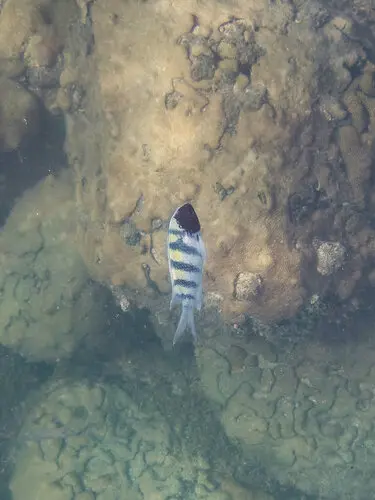
Cá Thia năm sọc

Abudefduf saxatilis (Linnaeus, 1758)

WoRMS — Tên cũ — đã được cập nhật
Tên hiện hành: Neoglyphidodon nigroris
Xem trên WoRMS (marinespecies.org)

Thông tin chính

Tên gọi khác
Cá Thia biển năm sọc, Cá Thia rạn năm sọc, Cá Chim thia năm sọc
Common Name (EN)
Sergeant Major.
Kích thước
140 - 170 mm.
Size
140 - 170 mm.

Phân bố

Hồng Hải, Nhật Bản, Đài Loan, Australia, Indonesia, Philippines, Trung Quốc, Việt Nam. Miền Trung, Nam Bộ.

Mẫu vật & Tài liệu

Nơi lưu trữ mẫu
Viện Hải dương học (Nha Trang).
Specimen
Institute of Oceanography (Nhatrang).
Tình trạng
Thường gặp.
Status
Common.
Tài liệu dẫn
de Beaufort, 1940. Herre, 1953.
Literature
de Beaufort, 1940. Herre, 1953.

Sinh học — Sinh thái BIO

Tên tiếng Anh (FishBase)
Sergeant-major
English name (FishBase)
Sergeant-major
Chiều dài tối đa
22.899999618530273 cm TL
Max length
22.899999618530273 cm TL
Trọng lượng tối đa
200 g
Max weight
200 g
Độ sâu phân bố
0 - 20 m
Depth range
0 - 20 m
Môi trường sống
Coral reefs, Benthic, Soft bottom, Rocky
Habitat
Coral reefs, Benthic, Soft bottom, Rocky
Sách Đỏ IUCN
LC
IUCN Red List
LC
Nguy hiểm cho người
Vô hại
Danger to humans
harmless
Kiểu ăn
variable
Feeding type
variable
Bậc dinh dưỡng
3.82
Trophic level
3.82
Hình thức sinh sản
Phân giới tính, thụ tinh ngoài
Reproduction
dioecism, external fertilization
Chăm sóc con
paternal
Parental care
paternal
Giá trị thương mại
Thương mại nhỏ
Importance
minor commercial
Nuôi trồng thủy sản
Không/hiếm khi
Aquaculture
never/rarely

Ghi chú chi tiết

Tóm tắt sinh học (FishBase)(Biology summary (FishBase))

Cá con thường xuất hiện ở các vũng triều, trong khi cá trưởng thành phân bố ở các rạn san hô nông. Cá trưởng thành thường tập hợp thành đàn lớn lên đến hàng trăm cá thể để kiếm ăn. Thức ăn bao gồm tảo, các loài giáp xác nhỏ, cá nhỏ và ấu trùng của nhiều loài không xương sống (Ref. 3139). Tại quần đảo Fernando de Noronha, loài này còn ăn phân và chất nôn của cá heo spinner. Hành vi ăn chất thải này được xem là sự chuyển đổi tập tính đơn giản từ ăn sinh vật phù du sang nhặt các mảnh vụn trôi nổi. Ngoài ra, cá con có thể thiết lập các trạm vệ sinh cùng với cá đuôi gai (Acanthurus chirurgus) và cá đuôi gai xanh (Acanthurus coeruleus), vừa ăn tảo vừa nhặt bỏ da chết và ký sinh trùng trên rùa xanh (Chelonia mydas). Hành vi này thường bắt đầu bằng việc kiểm tra đặc trưng, sau đó là rỉa thức ăn trên da rùa (đầu, chi và đuôi) cũng như trên mai rùa. Các bộ phận được kiểm tra và làm sạch nhiều nhất là vây (Ref. 48727, 51385). Cá đực trưởng thành chuyển sang màu nền hơi xanh khi canh giữ trứng. Loài đẻ trứng, có sự bắt cặp rõ rệt trong mùa sinh sản (Ref. 205). Trứng thuộc dạng trứng đáy và bám chặt vào giá thể (Ref. 205). Loài này bị thu hút bởi thợ lặn cho cá ăn. Được tiêu thụ dưới dạng cá tươi (Ref. 3139) và đã được nuôi trong môi trường nhân tạo (Ref. 35420).

Xem văn bản gốc tiếng Anh (FishBase / GBIF)

Juveniles are common in tide pools while adults are found over shallow reef tops. Adults frequently form large feeding aggregations of up to several hundred individuals. Food items include algae, small crustaceans and fish, and various invertebrate larvae (Ref. 3139). At Fernando de Noronha Archipelago, this species feeds on spinner dolphins’ feces and vomits. The offal feeding may be regarded as a simple behavioral shift from plankton feeding to drifting offal picking. Also, juveniles may hold cleaning stations together with the doctorfish (<i>Acanthurus chirurgus</i>) and the blue tang (<i>Acanthurus coeruleus</i>) and graze algae as well as pick molted skin and parasites from green turtles (<i>Chelonia mydas </i>). This behavior is preceded by a characteristic inspection usually followed by feeding nips on the turtles’ skin (head, limbs, and tail), as well as on the carapace. The most inspected and cleaned body parts are the flippers (Ref. 48727, 51385). Adult males adopt a bluish ground color when guarding eggs. Oviparous, distinct pairing during breeding (Ref. 205). Eggs are demersal and adhere to the substrate (Ref. 205). Attracted to divers who feed fish. Marketed fresh (Ref. 3139). Has been reared in captivity (Ref. 35420).

Ghi chú sinh thái(Ecology notes)

Sinh sống tại các rạn san hô hoặc rạn đá ở cả vùng gần bờ và xa bờ (Ref. 7247). Cá con phổ biến ở các vũng triều, trong khi cá trưởng thành thường thấy ở các đỉnh rạn nông. Cá trưởng thành thường kết đàn lớn để kiếm ăn với số lượng lên đến hàng trăm cá thể. Đây là loài ăn thực vật (Ref. 275). Thức ăn bao gồm tảo, giáp xác nhỏ, cá nhỏ và ấu trùng của nhiều loài không xương sống (Ref. 3139, 127989). Tại quần đảo Fernando de Noronha (Đông Nam Đại Tây Dương), loài này ăn phân và chất nôn của cá heo spinner; hành vi này được coi là sự chuyển đổi tập tính từ ăn sinh vật phù du sang nhặt mảnh vụn trôi nổi. Cá con cũng thiết lập các trạm vệ sinh cùng với cá đuôi gai (Acanthurus chirurgus) và cá đuôi gai xanh (Acanthurus coeruleus) để ăn tảo cũng như nhặt da chết và ký sinh trùng trên rùa xanh (Chelonia mydas). Hành vi này thường bắt đầu bằng việc kiểm tra, sau đó là rỉa thức ăn trên da và mai rùa, đặc biệt là phần vây (Ref. 48727, 51385). Đây là loài sống ở vùng ven bờ, thường hợp thành các nhóm từ nhỏ đến trung bình (Ref. 127989).

Xem văn bản gốc tiếng Anh (FishBase / GBIF)

Inhabits inshore and offshore coral or rocky reefs (Ref. 7247). Juveniles are common in tide pools while adults found over shallow reef tops. Adults frequently form large feeding aggregations of up to several hundred individuals. It feeds primarily as a browsing herbivore (Ref. 275). Food items include algae, small crustaceans and fish, and various invertebrate larvae (Refs. 3139, 127989). Feeds on spinner dolphins’ feces and vomits at Fernando de Noronha Archipelago, southeast Atlantic. The offal feeding may be regarded as a simple behavioral shift from plankton feeding to drifting offal picking. Also, juveniles hold cleaning stations together with the doctorfish (<i>Acanthurus chirurgus</i>) and the blue tang (<i>Acanthurus coeruleus</i>) and graze algae as well as pick molted skin and parasites from green turtles (<i>Chelonia mydas </i>). This behavior is preceded by a characteristic inspection usually followed by feeding nips on the turtles’ skin (head, limbs, and tail), as well as on the carapace. The most inspected and cleaned body parts are the flippers (Ref. 48727, 51385). Littoral species. Forms small to medium groups (Ref. 127989).

Ghi chú sinh sản(Reproduction notes)

Loài đẻ trứng, có sự bắt cặp rõ rệt trong mùa sinh sản (Ref. 205). Trứng thuộc dạng trứng đáy và bám chặt vào giá thể (Ref. 205). Cá đực có tập tính canh giữ và quạt nước cho trứng (Ref. 205).

Xem văn bản gốc tiếng Anh (FishBase / GBIF)

Oviparous, distinct pairing during breeding (Ref. 205). Eggs are demersal and adhere to the substrate (Ref. 205). Males guard and aerate the eggs (Ref. 205).

Danh pháp đồng nghĩa & Phân loại gốc

Chaetodon saxatilis
Glyphisodon saxatilis
Abudefduf saxatilis saxatilis
Glyphisodon ater
Chaetodon rotundus
Glyphisodon vaigiensis
Glyphisodon quanifasciatus
Glyphidodon coelestinus var waigiensis
Glyphisodon rahti
Glyphisodon tyrwhitti
Abudefduf saxatilis
Abudefduf septemfasciatus
Abudefduf sexfasciatus