
Quay lại danh sách
#193Tập 5

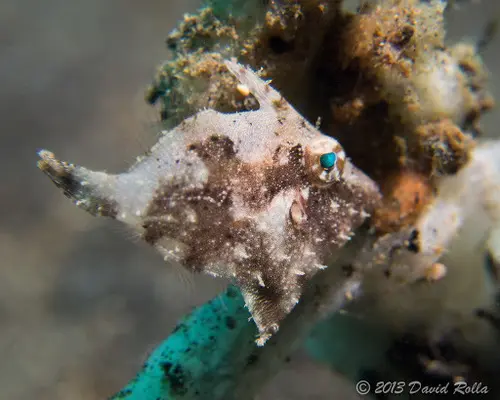
Cá Bò Lông Cao

Acreichthys tomentosus (Linnaeus, 1758)

WoRMS — Tên hợp lệ trên WoRMS
Tên được xác nhận
Xem trên WoRMS (marinespecies.org)

Thông tin chính

Tên gọi khác
Cá Bò da Lông Cao, Cá Bò gai Lông Cao
Common Name (EN)
Bristle-tail file-fish
Kích thước
Lớn nhất 8cm.
Size
Maximum 8cm.

Mô tả hình thái

Adults inhabit reef, weed, and rubble areas on shallow coral reefs (Ref. 43248, 48637), commonly found in seagrasses (Ref. 58881). Solitary (Ref. 90102). Major food items include amphipods, polychaetes and molluscs (Ref. 58881). Oviparous (Ref. 205).EN · FishBase/GBIF

Sinh thái & Dinh dưỡng

Habitat: Mangroves, Soft bottom. Feeding: variable. Depth range: 2 - 15 m. Adults inhabit sand and seagrass areas of protected lagoon reefs (Ref. 37816). Larval forms occur in mangrove waters (Ref. 43081). Major food items include amphipods, seaweeds, seagrasses, polychaetes and molluscs (Ref. 58881).EN · FishBase/GBIF

Phân bố

Vịnh Pơxian, Đông Châu Phi, Xri Lanca, Ốttrâylia, Inđônêxia, Niu Ghinê, Malaixia, Philíppin, Trung Quốc, Nhật Bản. Miền Trung Việt Nam.

Giá trị kinh tế

Commercial importance: minor commercial. Price category: unknown. Aquaculture: never/rarely. Vulnerability index: 15.57/100EN · FishBase/GBIF

Mẫu vật & Tài liệu

Nơi lưu trữ mẫu
Phân viện Hải Dương Học Hải Phòng.
Specimen
Haiphong Branch of Institute of Oceanography.
Tình trạng
Hiếm.
Status
Rare.
Tài liệu dẫn
Matsubara, 1955. De Beaufort and Briggs, 1962. Masuda and all, 1984.
Literature
Matsubara, 1955. De Beaufort and Briggs, 1962. Masuda and all, 1984.

Sinh học — Sinh thái BIO

Tên tiếng Anh (FishBase)
Bristle-tail file-fish
English name (FishBase)
Bristle-tail file-fish
Chiều dài tối đa
14.0 cm SL
Max length
14.0 cm SL
Độ sâu phân bố
2 - 15 m
Depth range
2 - 15 m
Môi trường sống
Mangroves, Soft bottom
Habitat
Mangroves, Soft bottom
Nguy hiểm cho người
Vô hại
Danger to humans
harmless
Kiểu ăn
variable
Feeding type
variable
Hình thức sinh sản
Phân giới tính, thụ tinh ngoài
Reproduction
dioecism, external fertilization
Giá trị thương mại
Thương mại nhỏ
Importance
minor commercial
Nuôi trồng thủy sản
Không/hiếm khi
Aquaculture
never/rarely

Ghi chú chi tiết

Tóm tắt sinh học (FishBase)(Biology summary (FishBase))

Cá trưởng thành sinh sống ở các khu vực có rạn san hô, thảm cỏ biển và vùng nền đáy vụn vỡ tại các rạn san hô nông, thường được tìm thấy phổ biến trong các thảm cỏ biển. Sống đơn độc. Thành phần thức ăn chủ yếu gồm động vật chân đều (amphipods), giun nhiều tơ (polychaetes) và động vật thân mềm (molluscs). Loài đẻ trứng.

Xem văn bản gốc tiếng Anh (FishBase / GBIF)

Adults inhabit reef, weed, and rubble areas on shallow coral reefs (Ref. 43248, 48637), commonly found in seagrasses (Ref. 58881). Solitary (Ref. 90102). Major food items include amphipods, polychaetes and molluscs (Ref. 58881). Oviparous (Ref. 205).

Ghi chú sinh thái(Ecology notes)

Cá trưởng thành sinh sống ở các vùng đáy cát và cỏ biển thuộc các rạn san hô trong đầm phá kín. Giai đoạn ấu trùng xuất hiện ở vùng nước ngập mặn. Thành phần thức ăn chủ yếu gồm động vật chân đều, rong biển, cỏ biển, giun nhiều tơ và động vật thân mềm.

Xem văn bản gốc tiếng Anh (FishBase / GBIF)

Adults inhabit sand and seagrass areas of protected lagoon reefs (Ref. 37816). Larval forms occur in mangrove waters (Ref. 43081). Major food items include amphipods, seaweeds, seagrasses, polychaetes and molluscs (Ref. 58881).

Danh pháp đồng nghĩa & Phân loại gốc

Balistes tomentosus Linnaeus, Syst. nat. ed.10, p.328, 1758.
Monacanthus tomentosus Cuvier, Regne Animal, Vol.2, p.152, 1817. Bleeker, 1865. Gunther, 1870. Day, 1888. Steindachner, 1901. Jordan and Richardson, 1908. Giltary, 1933. De Beaufort and Briggs, 1962.
Monacanthus trichiurus Bleeker, Nat. Tijds. Ned. Ind., Vol.4, p.125, 1853.
Monacanthus nemurus Jordan and Seale, Bull. Bur. Fish., Vol.26, p.36, 1907.
Stephanolepis tomentosus Herre, Phil. Jour. Sci., Vol.25, Nº.4, p.453, 1925.
Pervagor tomentosus Munro, The Marine and Fresh water fishes of Ceylon, p.274, 1955. Matsubara, 1955.
Acreichthys tomentosus Masuda and all, The Fishes of the Japanese Archipelago, p.360, 1984.