
Quay lại danh sách
#22Tập 5

Loài cá Mao Tiên Sư Tử
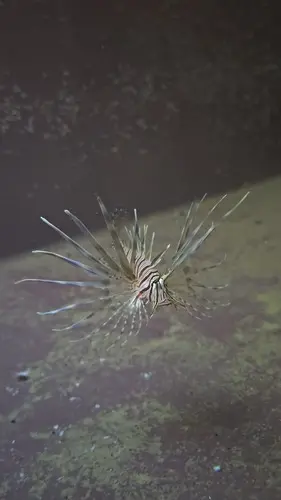
Pterois volitans Linnaeus, 1758

WoRMS — Tên hợp lệ trên WoRMS
Tên được xác nhận · cập nhật WoRMS: 2026-09-02
Xem trên WoRMS (marinespecies.org)

Thông tin chính

Tên gọi khác
Cá Mao Tiên
Common Name (EN)
Lionfish
Kích thước
Lớn nhất 380mm.
Size
Maximum 380mm.

Mô tả hình thái

We measured nine P. volitans larvae from 2.5 – 12.9 mm (Fig. 2 a – g) and examined others as supplemental material. Smallest preflexion larva characterized by precocious pectoral fins, deep base, elongate rays. Gut with single loop or “ twist ” (Fig. 2 a), and terminates slightly beyond mid-body; hindgut becomes rugose in early postflexion larvae. Flexion larvae with tips of longest developing pectoral rays to or beyond posterior margin of dorsal-fin base; by early postflexion, these rays extend to about terminal margin of caudal peduncle (CP) or beyond, if unbroken. Flexion larvae with pronounced “ hump ” in snout dorsal profile created by elevation of rostral cartilage (i. e., ascending process of premaxilla). Head deep, angle of lower jaw pronounced; snout typically 10 – 15 % shorter than OD; CP shortens, deepens as notochord flexes. Upper jaw terminates near mid-orbit; maxilla deepens near terminal margin, its maximum depth> 55 % OD. CP depth nearly equal to its length in postflexion and transforming larvae (Table 2). Seven BR. Pigmentation Pigmentation sparse in all larvae examined (Fig. 2 a – e). Internally, head with melanophore between lobes of midbrain in smallest larva, and on dorsoposterior surface of hindbrain and brainstem by 3.0 mm. Flexion larvae add pigment to ventrolateral surface of each lobe of hindbrain (otic region), which together with midbrain pigment forms “ triangular ” pattern when viewed downward from top of head (Kitchens et al. 2017: fig. 3). Early postflexion larvae (~ 5.0 mm) with series of subsurface melanophores across dorsoposterior margin of midbrain, and dorsal and lateral surfaces of hindbrain and brainstem; this pigment gradually obscured by cranial ossification and thickening musculature in early transformers (~ 10.0 mm). Behind head, pigment on dorsoposterior margin of hindgut near anus in smallest larva (Fig. 2 a) becomes more conspicuous in flexion larvae. Dorsal surface of visceral mass along body wall lightly pigmented at EN · FishBase/GBIF

Sinh thái & Dinh dưỡng

Habitat: Neritic, Coral reefs, Benthic. Feeding: hunting macrofauna (predator). Depth range: 2 - 55 m. Inhabits lagoon and seaward reefs from turbid inshore areas to depths of 50 m. Hides in unexposed places at daytime often with head down and practically immobile. Pelagic juveniles expatriate over great distances and the reason for their broad geographical range (Ref. 48635). Hunts small fishes, shrimps, and crabs at night, using its widespread pectorals trapping prey into a corner, stunning it and then swallowing it in one sweep. Daylight hours are spent resting under ledges, in caves or among wreckage, either singly or in aggregations (Ref. 54301). Dorsal spines are venomous; the sting can be treated by heating the afflicted part and application of corticoids (Ref. 5503).EN · FishBase/GBIF

Phân bố

Đông Châu Phi, Đông Ấn Độ Dương, Biển Đỏ, Ấn Độ, Xri Lanca, Ôttrâylia, Inđônêxia, Malaixia, Philíppin, Trung Quốc, Đài Loan, Nhật Bản, Hàn Quốc. Vịnh Bắc Bộ, Miền Trung Việt Nam, Quần Đảo Trường Sa (Việt Nam).

Giá trị kinh tế

Commercial importance: commercial. Price category: high. Aquaculture: never/rarely. Vulnerability index: 34.43/100EN · FishBase/GBIF

Mẫu vật & Tài liệu

Nơi lưu trữ mẫu
Viện Hải Dương Học (Nha Trang).
Specimen
Institute of Oceanography (Nha Trang).
Tình trạng
Thường gặp, số lượng ít.
Status
Common, seldom abundant.
Tài liệu dẫn
Herre, 1953. De Beaufort and Briggs, 1962. Orsi, 1974.
Literature
Herre, 1953. De Beaufort and Briggs, 1962. Orsi, 1974.

Sinh học — Sinh thái BIO

Tên tiếng Anh (FishBase)
Red lionfish
English name (FishBase)
Red lionfish
Chiều dài tối đa
45.70000076293945 cm TL
Max length
45.70000076293945 cm TL
Trọng lượng tối đa
1,442 g
Max weight
1,442 g
Tuổi thọ
10.0 năm
Longevity
10.0 năm
Độ sâu phân bố
2 - 55 m
Depth range
2 - 55 m
Môi trường sống
Neritic, Coral reefs, Benthic
Habitat
Neritic, Coral reefs, Benthic
Nguy hiểm cho người
Có nọc độc
Danger to humans
venomous
Kiểu ăn
Săn mồi lớn (ăn thịt)
Feeding type
hunting macrofauna (predator)
Bậc dinh dưỡng
4.35
Trophic level
4.35
Hình thức sinh sản
Phân giới tính, thụ tinh ngoài
Reproduction
dioecism, external fertilization
Giá trị thương mại
Thương mại
Importance
commercial
Nuôi trồng thủy sản
Không/hiếm khi
Aquaculture
never/rarely

Ghi chú chi tiết

Tóm tắt sinh học (FishBase)(Biology summary (FishBase))

Sinh sống ở các đầm phá và rạn san hô hướng biển, từ các vùng nước ven bờ đục cho đến độ sâu 50 m. Thường sống đơn độc, ẩn nấp ở những nơi khuất vào ban ngày, đầu thường chúc xuống và bất động. Cá con tầng nổi có khả năng phát tán đi rất xa, đây là nguyên nhân giải thích cho phạm vi phân bố địa lý rộng lớn của loài này (Chú thích 48635). Săn bắt cá nhỏ, tôm và cua vào ban đêm, sử dụng các vây ngực xòe rộng để dồn con mồi vào góc, làm choáng rồi nuốt gọn trong một cú đớp. Các tia vây lưng có độc; vết đốt có thể được xử lý bằng cách chườm nóng vùng bị thương và bôi corticoid (Chú thích 5503). Là loài cá thực phẩm được ưa chuộng.

Xem văn bản gốc tiếng Anh (FishBase / GBIF)

Inhabit lagoon and seaward reefs from turbid inshore areas to depths of 50 m. Often solitary, they hide in unexposed places at daytime often with head down and practically immobile. Pelagic juveniles expatriate over great distances and the reason for their broad geographical range (Ref. 48635). Hunt small fishes, shrimps, and crabs at night, using its widespread pectorals trapping prey into a corner, stunning it and then swallowing it in one sweep. Dorsal spines are venomous; the sting can be treated by heating the afflicted part and application of corticoids (Ref. 5503). A popular table fish.

Ghi chú sinh thái(Ecology notes)

Phân bố tại các đầm phá và rạn san hô hướng biển, từ vùng nước ven bờ đục đến độ sâu 50 m. Thường ẩn nấp ở những nơi khuất vào ban ngày với tư thế chú chúc đầu xuống và gần như bất động. Cá con tầng nổi phát tán qua những khoảng cách rất xa, giải thích cho phạm vi phân bố rộng của chúng (Chú thích 48635). Săn mồi về đêm gồm cá nhỏ, tôm và cua, sử dụng vây ngực rộng để dồn con mồi vào góc, làm choáng và nuốt trọn trong một lần. Ban ngày thường nghỉ ngơi dưới các gờ đá, trong hang động hoặc xác tàu đắm, sống đơn độc hoặc tụ tập thành bầy (Chú thích 54301). Các tia vây lưng có độc; vết chích có thể được sơ cứu bằng cách làm ấm vùng bị thương và bôi corticoid (Chú thích 5503).

Xem văn bản gốc tiếng Anh (FishBase / GBIF)

Inhabits lagoon and seaward reefs from turbid inshore areas to depths of 50 m. Hides in unexposed places at daytime often with head down and practically immobile. Pelagic juveniles expatriate over great distances and the reason for their broad geographical range (Ref. 48635). Hunts small fishes, shrimps, and crabs at night, using its widespread pectorals trapping prey into a corner, stunning it and then swallowing it in one sweep. Daylight hours are spent resting under ledges, in caves or among wreckage, either singly or in aggregations (Ref. 54301). Dorsal spines are venomous; the sting can be treated by heating the afflicted part and application of corticoids (Ref. 5503).

Mô tả hình thái (GBIF)(Morphological description (GBIF))

Chúng tôi đã đo đạc chín cá thể ấu trùng P. volitans có kích thước từ 2,5 – 12,9 mm (Hình 2 a – g) và kiểm tra các mẫu bổ sung khác. Ấu trùng tiền uốn cong (preflexion) nhỏ nhất đặc trưng bởi các vây ngực phát triển sớm, gốc vây sâu, các tia vây kéo dài. Ruột có một quấn đơn hoặc dạng "xoắn" (Hình 2 a), kết thúc ở vị trí hơi vượt quá giữa cơ thể; ruột sau trở nên nhăn nheo ở giai đoạn đầu của ấu trùng hậu uốn cong (postflexion). Ấu trùng uốn cong có đầu các tia vây ngực phát triển dài nhất vươn tới hoặc vượt qua rìa sau của gốc vây lưng; ở giai đoạn đầu hậu uốn cong, các tia này kéo dài đến khoảng rìa tận cùng của cuống đuôi (CP) hoặc xa hơn nếu không bị gãy. Ấu trùng uốn cong có phần "bướu" rõ rệt ở biên dạng lưng mõm do sự nâng lên của sụn mũi (tức là mỏm lên của xương tiền hàm). Đầu sâu, góc hàm dưới rõ nét; mõm thường ngắn hơn 10 – 15 % đường kính ổ mắt (OD); cuống đuôi ngắn lại và sâu hơn khi dây sống uốn cong. Hàm trên kết thúc gần giữa ổ mắt; xương hàm trên sâu dần gần rìa tận cùng, chiều sâu tối đa > 55 % OD. Chiều sâu cuống đuôi gần bằng chiều dài của nó ở giai đoạn ấu trùng hậu uốn cong và biến thái (Bảng 2). Có bảy tia màng nắp mang (BR). Sắc tố: Sắc tố thưa thớt ở tất cả các ấu trùng được kiểm tra (Hình 2 a – e). Ở bên trong, đầu có tế bào sắc tố melanin nằm giữa các thùy của não giữa ở cá thể ấu trùng nhỏ nhất, và xuất hiện trên bề mặt lưng sau của não sau và thân não ở kích thước 3,0 mm. Ấu trùng uốn cong có thêm sắc tố ở bề mặt bụng-bên của mỗi thùy não sau (vùng tai), kết hợp với sắc tố não giữa tạo thành mô hình "tam giác" khi nhìn từ đỉnh đầu xuống (Kitchens et al. 2017: hình 3). Ấu trùng hậu uốn cong sớm (~ 5,0 mm) có chuỗi tế bào sắc tố melanin dưới da chạy ngang qua rìa lưng-sau của não giữa, và các bề mặt lưng, bên của não sau và thân não; lớp sắc tố này dần bị che khuất bởi quá trình cốt hóa hộp sọ và sự dày lên của cơ ở giai đoạn đầu biến thái (~ 10,0 mm). Phía sau đầu, sắc tố ở rìa lưng-sau của ruột sau gần hậu môn ở ấu trùng nhỏ nhất (Hình 2 a) trở nên rõ rệt hơn ở các ấu trùng uốn cong. Bề mặt lưng của khối nội tạng dọc theo thành cơ thể có sắc tố nhạt tại

Xem văn bản gốc tiếng Anh (FishBase / GBIF)

We measured nine P. volitans larvae from 2.5 – 12.9 mm (Fig. 2 a – g) and examined others as supplemental material. Smallest preflexion larva characterized by precocious pectoral fins, deep base, elongate rays. Gut with single loop or “ twist ” (Fig. 2 a), and terminates slightly beyond mid-body; hindgut becomes rugose in early postflexion larvae. Flexion larvae with tips of longest developing pectoral rays to or beyond posterior margin of dorsal-fin base; by early postflexion, these rays extend to about terminal margin of caudal peduncle (CP) or beyond, if unbroken. Flexion larvae with pronounced “ hump ” in snout dorsal profile created by elevation of rostral cartilage (i. e., ascending process of premaxilla). Head deep, angle of lower jaw pronounced; snout typically 10 – 15 % shorter than OD; CP shortens, deepens as notochord flexes. Upper jaw terminates near mid-orbit; maxilla deepens near terminal margin, its maximum depth> 55 % OD. CP depth nearly equal to its length in postflexion and transforming larvae (Table 2). Seven BR. Pigmentation Pigmentation sparse in all larvae examined (Fig. 2 a – e). Internally, head with melanophore between lobes of midbrain in smallest larva, and on dorsoposterior surface of hindbrain and brainstem by 3.0 mm. Flexion larvae add pigment to ventrolateral surface of each lobe of hindbrain (otic region), which together with midbrain pigment forms “ triangular ” pattern when viewed downward from top of head (Kitchens et al. 2017: fig. 3). Early postflexion larvae (~ 5.0 mm) with series of subsurface melanophores across dorsoposterior margin of midbrain, and dorsal and lateral surfaces of hindbrain and brainstem; this pigment gradually obscured by cranial ossification and thickening musculature in early transformers (~ 10.0 mm). Behind head, pigment on dorsoposterior margin of hindgut near anus in smallest larva (Fig. 2 a) becomes more conspicuous in flexion larvae. Dorsal surface of visceral mass along body wall lightly pigmented at

Danh pháp đồng nghĩa & Phân loại gốc

Gasterosteus volitans Linnaeus, Syst. Nat., ed.10, p.296, 1758.
Scorpaena volitans Bloch, Naturges. Ausland Fische, Vol.3, p.18, pl.184, 1787. Bennett, 1830.
Pterois volitans Cuvier and Valenciennes, Hist. Nat. Poiss., Vol.4, p.258, fig.88, 1829. Ruppell, 1853. Gunther, 1870. Day, 1878. Jordan and Seale, 1906. Evermann and Seale, 1907. Fowler, 1928. Herre, 1934.
Pseudomonopterus volitans Bleeker, Ned. Tijds. Dierk., Vol.1, p.234, 1863.
Pseudomonopterus (Pterois) volitans Bleeker, Verh. Akad. Amsterdam, Vol.16, p.42, 1876.