
Quay lại danh sách
#253Tập 5

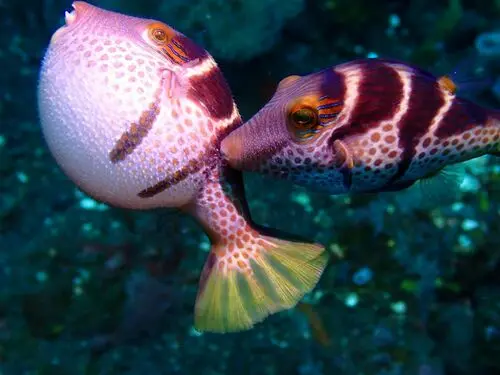
Cá Nóc Dẹt Valăng

Canthigaster valentini (Bleeker, 1853)

WoRMS — Tên hợp lệ trên WoRMS
Tên được xác nhận
Xem trên WoRMS (marinespecies.org)

Thông tin chính

Tên gọi khác
Cá Cóc biển Dẹt Valăng, Cá Nóc gai Dẹt Valăng
Common Name (EN)
Valentinni's sharpnose puffer
Kích thước
Lớn nhất 11cm.
Size
Maximum 11cm.

Mô tả hình thái

Found among coral heads and rocks of subtidal lagoon and seaward reefs (Ref. 4919, 5503). Common on coastal reefs at various depths. Mimic filefish, males are territorial and are often seen fighting (Ref. 48637). Feed mainly on filamentous green and red algae, tunicates, and on smaller amounts of corals, bryozoans, polychaetes, echinoderms, mollusks, and brown and coralline red algae. Form shoals (10-100 or more) often with the filefish, <i>Paraluteres prionurus</i> (about 5% of shoal) mimicking <i>C. valentini</i> to protect it from predators (Ref. 4919, 5503). Territorial and haremic; males spawn with a different female each day (Ref. 9710). One or more territories are occupied and defended each by a female where a single large male stands guard (Ref. 55082). All sexually mature females are territorial females (Ref. 55082). Demersal spawner (Ref. 35298).EN · FishBase/GBIF

Sinh thái & Dinh dưỡng

Habitat: Coral reefs, Rocky. Feeding: variable. Depth range: 1 - 55 m. Found among coral heads and rocks of subtidal lagoon and seaward reefs (Ref. 4919, 5503). Common on coastal reefs at various depths. Mimic filefish, males are territorial and are often seen fighting (Ref. 48637). Feeds mainly on filamentous green and red algae, tunicates, and on smaller amounts of corals, bryozoans, polychaetes, echinoderms, mollusks, and brown and coralline red algae. Forms shoals (10-100 or more) often with the filefish, <i>Paraluteres prionurus</i> (about 5% of shoal) mimicking <i>C. valentini</i> to protect it from predators (Ref. 4919, 5503). Territorial and haremic; males spawn with a different female each day (Ref. 9710). One or more territories are occupied and defended each by a female where a single large male stands guard (Ref. 55082).EN · FishBase/GBIF

Phân bố

Đông Châu Phi, Đandiba, Mauritiux, Biển Đỏ, Vịnh Aden, Ốttrâylia, Micrônêxia, Inđônêxia, Malaixia, Philíppin, Hawaii, Trung Quốc, Đài Loan, Nhật Bản. Miền Trung, Nam Bộ, Quần Đảo Trường Sa (Việt Nam)

Giá trị kinh tế

Commercial importance: commercial. Price category: very high. Aquaculture: never/rarely. Vulnerability index: 10.0/100EN · FishBase/GBIF

Mẫu vật & Tài liệu

Nơi lưu trữ mẫu
Viện Hải Dương Học (Nha Trang).
Specimen
Institute of Oceanography (Nha Trang).
Tình trạng
Thường gặp, số lượng ít.
Status
Common, seldom abundant.
Tài liệu dẫn
Herre, 1953. De Beaufort and Briggs, 1962. Masuda and all, 1984. Shen, 1993.
Literature
Herre, 1953. De Beaufort and Briggs, 1962. Masuda and all, 1984. Shen, 1993.

Sinh học — Sinh thái BIO

Tên tiếng Anh (FishBase)
Valentin's sharpnose puffer
English name (FishBase)
Valentin's sharpnose puffer
Chiều dài tối đa
11.0 cm TL
Max length
11.0 cm TL
Độ sâu phân bố
1 - 55 m
Depth range
1 - 55 m
Môi trường sống
Coral reefs, Rocky
Habitat
Coral reefs, Rocky
Nguy hiểm cho người
Độc khi ăn
Danger to humans
poisonous to eat
Kiểu ăn
variable
Feeding type
variable
Hình thức sinh sản
Phân giới tính, thụ tinh ngoài
Reproduction
dioecism, external fertilization
Mùa sinh sản
no obvious seasonal peak
Spawning
no obvious seasonal peak
Giá trị thương mại
Thương mại
Importance
commercial
Nuôi trồng thủy sản
Không/hiếm khi
Aquaculture
never/rarely

Ghi chú chi tiết

Tóm tắt sinh học (FishBase)(Biology summary (FishBase))

Phân bố tại các khối san hô và bãi đá ở vùng dưới triều của đầm phá và rạn san hô hướng biển (Ref. 4919, 5503). Thường gặp trên các rạn san hô ven bờ ở các độ tuổi và độ sâu khác nhau. Có loài cá bò giả dạng, con đực có tính lãnh thổ và thường xuyên đánh nhau (Ref. 48637). Thức ăn chủ yếu gồm tảo lục và tảo đỏ dạng sợi, hải tiêu, cùng với một lượng nhỏ san hô, động vật hình rêu, giun nhiều tơ, da gai, động vật thân mềm, tảo nâu và tảo đỏ vôi. Thường kết thành đàn (từ 10-100 cá thể hoặc hơn), thường đi cùng loài cá bò <i>Paraluteres prionurus</i> (chiếm khoảng 5% đàn) có đặc điểm giả dạng <i>C. valentini</i> nhằm tránh kẻ thù (Ref. 4919, 5503). Có tính lãnh thổ và tập tính đa thê; con đực giao phối với một con cái khác nhau mỗi ngày (Ref. 9710). Mỗi con cái chiếm giữ và bảo vệ một hoặc nhiều lãnh thổ, nơi có một con đực lớn đơn độc canh giữ (Ref. 55082). Tất cả các con cái đã trưởng thành sinh dục đều có tính lãnh thổ (Ref. 55082). Loài đẻ trứng tầng đáy (Ref. 35298).

Xem văn bản gốc tiếng Anh (FishBase / GBIF)

Found among coral heads and rocks of subtidal lagoon and seaward reefs (Ref. 4919, 5503). Common on coastal reefs at various depths. Mimic filefish, males are territorial and are often seen fighting (Ref. 48637). Feed mainly on filamentous green and red algae, tunicates, and on smaller amounts of corals, bryozoans, polychaetes, echinoderms, mollusks, and brown and coralline red algae. Form shoals (10-100 or more) often with the filefish, <i>Paraluteres prionurus</i> (about 5% of shoal) mimicking <i>C. valentini</i> to protect it from predators (Ref. 4919, 5503). Territorial and haremic; males spawn with a different female each day (Ref. 9710). One or more territories are occupied and defended each by a female where a single large male stands guard (Ref. 55082). All sexually mature females are territorial females (Ref. 55082). Demersal spawner (Ref. 35298).

Ghi chú sinh thái(Ecology notes)

Phân bố tại các khối san hô và bãi đá ở vùng dưới triều của đầm phá và rạn san hô hướng biển (Ref. 4919, 5503). Thường gặp trên các rạn san hô ven bờ ở các độ sâu khác nhau. Có loài cá bò giả dạng, con đực có tính lãnh thổ và thường xuyên đánh nhau (Ref. 48637). Thức ăn chủ yếu gồm tảo lục và tảo đỏ dạng sợi, hải tiêu, cùng với một lượng nhỏ san hô, động vật hình rêu, giun nhiều tơ, da gai, động vật thân mềm, tảo nâu và tảo đỏ vôi. Thường kết thành đàn (từ 10-100 cá thể hoặc hơn), thường đi cùng loài cá bò <i>Paraluteres prionurus</i> (chiếm khoảng 5% đàn) có đặc điểm giả dạng <i>C. valentini</i> nhằm tránh kẻ thù (Ref. 4919, 5503). Có tính lãnh thổ và tập tính đa thê; con đực giao phối với một con cái khác nhau mỗi ngày (Ref. 9710). Mỗi con cái chiếm giữ và bảo vệ một hoặc nhiều lãnh thổ, nơi có một con đực lớn đơn độc canh giữ (Ref. 55082).

Xem văn bản gốc tiếng Anh (FishBase / GBIF)

Found among coral heads and rocks of subtidal lagoon and seaward reefs (Ref. 4919, 5503). Common on coastal reefs at various depths. Mimic filefish, males are territorial and are often seen fighting (Ref. 48637). Feeds mainly on filamentous green and red algae, tunicates, and on smaller amounts of corals, bryozoans, polychaetes, echinoderms, mollusks, and brown and coralline red algae. Forms shoals (10-100 or more) often with the filefish, <i>Paraluteres prionurus</i> (about 5% of shoal) mimicking <i>C. valentini</i> to protect it from predators (Ref. 4919, 5503). Territorial and haremic; males spawn with a different female each day (Ref. 9710). One or more territories are occupied and defended each by a female where a single large male stands guard (Ref. 55082).

Ghi chú sinh sản(Reproduction notes)

Đẻ trứng (Ref. 205). Hệ thống xã hội và giao phối của loài này dựa trên tính lãnh thổ của con cái, trong đó tập tính đa thê xuất hiện do con đực bảo vệ những con cái chiếm giữ một lãnh thổ nhất định (đa thê bảo vệ con cái) (Ref. 55082). Tất cả các con cái đã trưởng thành sinh dục đều có tính lãnh thổ (Ref. 55082). Không có cá bố mẹ nào canh giữ trứng; trứng được đẻ trong một tổ nằm trong lãnh thổ của con cái (Ref. 46142). Trong thời gian sinh sản, những con cái có lãnh thổ thực hiện hành vi 'uốn cong vây đuôi cùng với biểu hiện phình bụng' để ra hiệu cầu tình và sẵn sàng đẻ trứng. Con đực không có màn cầu tình hay đổi màu sắc mà phản hồi bằng cách thường xuyên ghé thăm các vị trí này. Con cái có lãnh thổ sau đó bắt đầu mổ xuống nền đáy để chuẩn bị đẻ trứng. Con cái khởi xướng quá trình đẻ trứng bằng cách ấn phần bụng vào vị trí đã chuẩn bị. Con đực có lãnh thổ nhanh chóng áp sát cơ thể vào cuống đuôi của con cái và cả hai giữ nguyên tư thế này trong 5-10 giây. Con đực bơi đi sau khi để con cái vẫy nhanh vây hậu môn trên khu vực làm tổ nhằm đảm bảo thụ tinh cho trứng và đẩy trứng sâu vào lớp nền tảo (Ref. 46142). Tất cả các con đực có lãnh thổ đều sinh sản với những con cái có lãnh thổ, tước đi cơ hội giao phối của những con đực độc thân; tuy nhiên, những con đực độc thân không hề cản trở quá trình sinh sản giữa con đực và con cái có lãnh thổ (Ref. 46142).

Xem văn bản gốc tiếng Anh (FishBase / GBIF)

Oviparous (Ref. 205). Social and mating systems of this species are based upon female territoriality where polygyny results from males defending females occupying a certain territory (female-defense polygyny) (Ref. 55082). All sexually mature females are territorial females (Ref. 55082). Neither parent guards the eggs which are laid in a nest located in the female's territory (Ref. 46142). During breeding, territorial females perform the 'caudal flexing with swollen abdomen display' to signal courtship and readiness to spawn. The male acknowledges with no courtship or color displays but rather by visiting the sites frequently. The territorial female then begins pecking at the substrate in preparation for egg laying. The female initiates the spawning event by pressing her abdomen into the prepared site. The territorial male quickly lays his body across her caudal peduncle and both remained in this position for 5-10 sec. The male swims away after leaving the female beating her anal fin rapidly over the nest site to ensure fertilization of the eggs and to push the eggs deep into the algal substrate (Ref. 46142). All territorial males spawn with territorial females, depriving the bachelor males of the chance to copulate which nevertheless don't interfere with the spawning between the territorial male and females (Ref. 46142).

Danh pháp đồng nghĩa & Phân loại gốc

Tetraodon valentini Bleeker, Nat. Tijds. Ned. Ind., Vol.4, p.130, 1853.
Tetrodon taeniatus Peters, Monatsber. Akad. Wiss. Berlin, p.462, 1855.
Psilonotus valentyni Bleeker, Ned Tijds. Dierk., Vol.2, p.272, 1865.
Canthigaster valentyni Bleeker, Atlas Ichth., Vol.5, p.80, 1865.
Tetrodon valentyni Gunther, Fishes of Zanzibar, p.132, 1866.
Tetrodon valentini Gunther, Cat. Brit. Mus., Vol.8, p.305, 1870.
Canthigaster cinctus Jordan and Evermann, Bull. U.S. Fish. Comm., Vol.23, p.433, 1905. Jordan and Seale, 1906. Tanaka, 1912. McCulloch, 1922. Fowler, 1928.
Tropidichthys valentini Weber, Siboga Exp. Fische, p.587, 1913.
Tropidichthys cinctus Barnard, Ann. South Afri. Mus., Vol.21, p.976, Part 2, 1927.
Canthigaster valentini Abe, Bull. Biogeogr. Soc. Japan, Vol.14, Nº.1, p.3 - 4, 1949. Smith, 1950.