
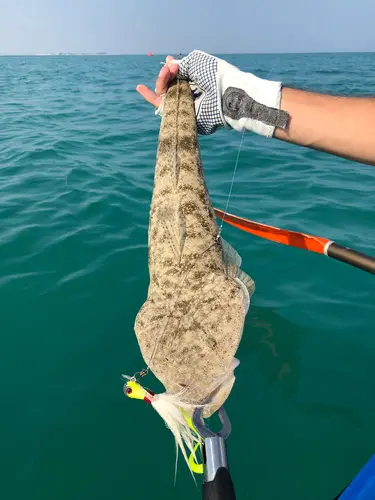
Found on sandy and muddy bottoms of coastal waters (Ref. 5213, 48635). Frequently in estuaries, juveniles have been taken in freshwater. Taken by handlining and seining in shallow waters and by trawling at depths to 30 m, usually less (Ref. 9790). A good food fish (Ref. 4315) that is marketed fresh (Ref. 5284). Commercially cultured in Japan. Used in Chinese medicine (Ref. 12166).EN · FishBase/GBIF
Sinh thái & Dinh dưỡng
Habitat: Estuaries, Coral reefs, Benthic, Soft bottom, Mud. Feeding: hunting macrofauna (predator). Depth range: 20 - 200 m. Found inshore (Ref. 75154). Euryhaline species. Feeds mainly on crustaceans and fish (Also Ref. 9773). Ambush predator. Dwells in benthic sandy or muddy substrates (Refs. 127989, 9773), and is common in estuaries (Ref. 9773). Benthic non-shoaling species. Buries itself in mud as effective camouflage. Juveniles venture to mangrove areas for shelter and feeding (Ref. 9773).EN · FishBase/GBIF
Phân bố
Địa Trung Hải, Nam Phi, Biển Đỏ, Ấn Độ, Ôttrâylia, Inđônêxia, Philíppin, Trung Quốc, Đài Loan. Vịnh Bắc Bộ, Miền Trung, Nam Bộ, Việt Nam
Herre, 1953. Chu Nguyên Đinh, 1962. De Beaufort and Briggs, 1962. Orsi, 1974.
Literature
Herre, 1953. Chu, 1962. De Beaufort and Briggs, 1962. Orsi, 1974.
Sinh học — Sinh thái BIO
Tên tiếng Anh (FishBase)
Bartail flathead
English name (FishBase)
Bartail flathead
Chiều dài tối đa
100.0 cm TL
Max length
100.0 cm TL
Trọng lượng tối đa
3,500 g
Max weight
3,500 g
Độ sâu phân bố
20 - 200 m
Depth range
20 - 200 m
Môi trường sống
Estuaries, Coral reefs, Benthic, Soft bottom, Mud
Habitat
Estuaries, Coral reefs, Benthic, Soft bottom, Mud
Nguy hiểm cho người
Vô hại
Danger to humans
harmless
Kiểu ăn
Săn mồi lớn (ăn thịt)
Feeding type
hunting macrofauna (predator)
Bậc dinh dưỡng
3.60
Trophic level
3.60
Hình thức sinh sản
Phân giới tính, thụ tinh ngoài
Reproduction
dioecism, external fertilization
Giá trị thương mại
Thương mại
Importance
commercial
Nuôi trồng thủy sản
Thương mại
Aquaculture
commercial
Ghi chú chi tiết
Tóm tắt sinh học (FishBase)(Biology summary (FishBase))
Phân bố trên nền đáy cát và bùn của vùng nước ven biển (Ref. 5213, 48635). Thường xuất hiện ở các cửa sông, cá con từng được ghi nhận ở vùng nước ngọt. Được khai thác bằng nghề câu tay và lưới vây ở vùng nước nông và bằng nghề lưới kéo ở độ sâu đến 30 m, thường nông hơn (Ref. 9790). Là loài cá thực phẩm có giá trị (Ref. 4315) được thương mại hóa dưới dạng cá tươi (Ref. 5284). Được nuôi thương phẩm tại Nhật Bản. Được sử dụng trong y học cổ truyền Trung Hoa (Ref. 12166).
Xem văn bản gốc tiếng Anh (FishBase / GBIF)
Found on sandy and muddy bottoms of coastal waters (Ref. 5213, 48635). Frequently in estuaries, juveniles have been taken in freshwater. Taken by handlining and seining in shallow waters and by trawling at depths to 30 m, usually less (Ref. 9790). A good food fish (Ref. 4315) that is marketed fresh (Ref. 5284). Commercially cultured in Japan. Used in Chinese medicine (Ref. 12166).
Ghi chú sinh thái(Ecology notes)
Phân bố ở vùng gần bờ (Ref. 75154). Là loài rộng muối. Thức ăn chủ yếu gồm động vật giáp xác và cá (Đồng thời tham khảo Ref. 9773). Loài săn mồi kiểu mai phục. Sống ở tầng đáy trên nền đáy cát hoặc bùn (Ref. 127989, 9773), và phổ biến ở các vùng cửa sông (Ref. 9773). Loài sống ở đáy và không tạo đàn. Vùi mình trong bùn như một hình thức ngụy trang hiệu quả. Cá con di chuyển vào các khu vực rừng ngập mặn để trú ẩn và kiếm ăn (Ref. 9773).
Xem văn bản gốc tiếng Anh (FishBase / GBIF)
Found inshore (Ref. 75154). Euryhaline species. Feeds mainly on crustaceans and fish (Also Ref. 9773). Ambush predator. Dwells in benthic sandy or muddy substrates (Refs. 127989, 9773), and is common in estuaries (Ref. 9773). Benthic non-shoaling species. Buries itself in mud as effective camouflage. Juveniles venture to mangrove areas for shelter and feeding (Ref. 9773).